
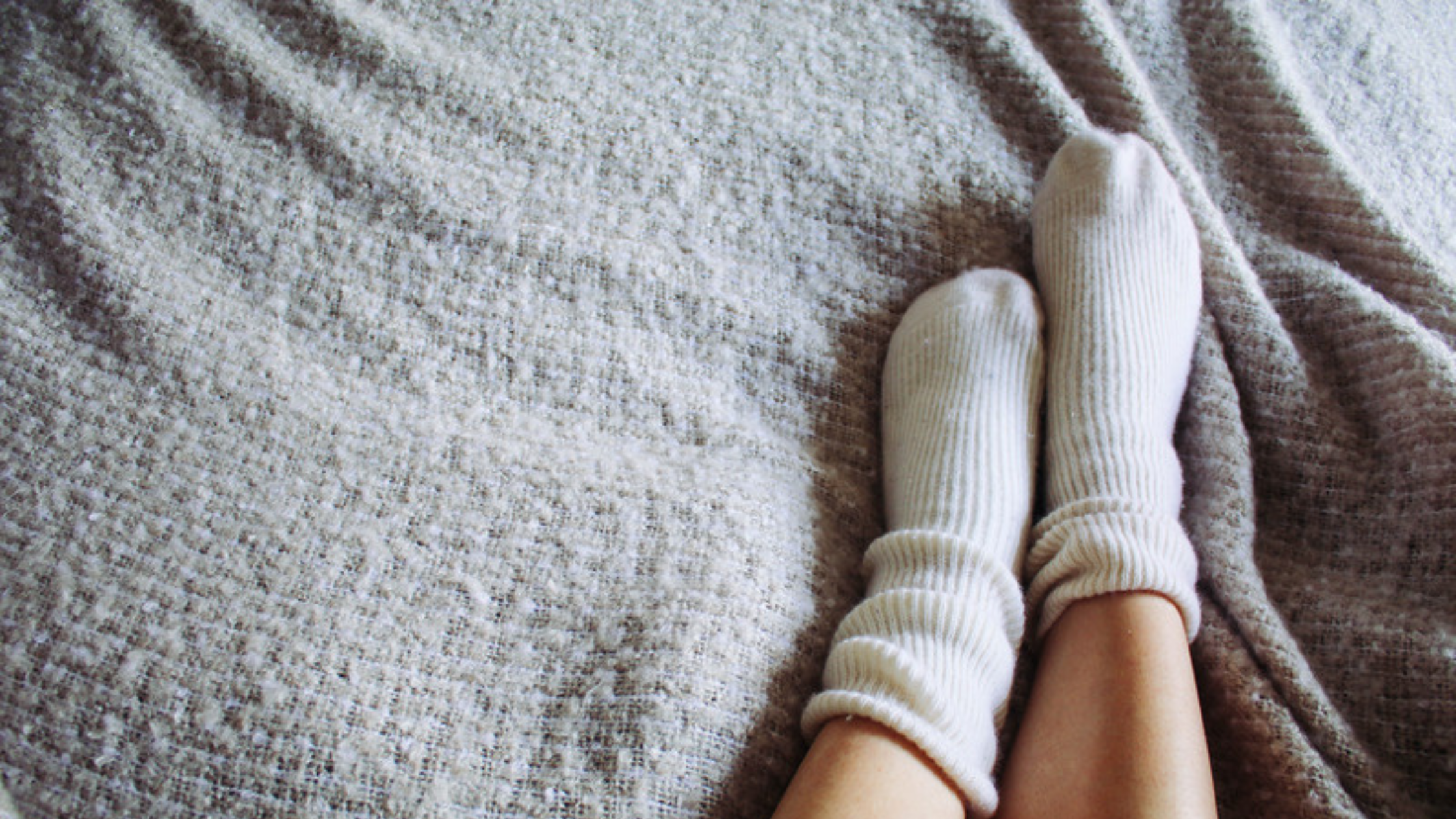
If you've ever climbed into bed with cold feet, you've probably wondered whether wearing socks to sleep is a good idea. While some people can't imagine sleeping with socks on, others swear it helps them fall asleep faster and stay warm all night.
As it turns out, science suggests there may be real benefits to wearing socks to bed. The key isn't simply keeping your feet warm—it's how warm feet help your body prepare for sleep.
Here's what research tells us about wearing socks to bed and whether it's the right choice for you.
How Your Body Prepares for Sleep
Your body follows a natural 24-hour cycle called the circadian rhythm, which regulates when you feel awake and when you feel sleepy.
As bedtime approaches:
- Your brain releases the hormone melatonin.
- Your core body temperature begins to decrease.
- Blood vessels in your hands and feet widen.
- Heat moves from the center of your body to your extremities.
This process helps signal to your brain that it's time to sleep.
Why Warm Feet Can Help You Fall Asleep
It may seem counterintuitive, but warming your feet can actually help cool your body's core temperature.
When your feet become warm, blood vessels near the skin widen in a process called vasodilation. This allows heat to escape more efficiently from your body.
As your core temperature drops, your brain receives a stronger signal that it's time for sleep.
This is one reason why wearing socks may help some people fall asleep more quickly.
Potential Benefits of Wearing Socks to Bed
You May Fall Asleep Faster
Several studies suggest that warming the feet before bedtime may shorten the time it takes to fall asleep.
This is particularly helpful for people who:
- Frequently have cold feet
- Take a long time to fall asleep
- Sleep in a cool bedroom
While socks are not a cure for insomnia, they may support your body's natural sleep process.
Improved Sleep Quality
Some research suggests that people who keep their feet comfortably warm experience:
- Fewer nighttime awakenings
- More continuous sleep
- Better overall sleep satisfaction
Maintaining a comfortable body temperature throughout the night may contribute to more restorative sleep.
Greater Comfort During Cold Weather
During colder months, wearing socks can make it easier to stay comfortable without significantly increasing your home's thermostat.
A comfortable sleep environment supports healthy sleep, and warm feet may help prevent nighttime discomfort that could otherwise wake you up.
Can Wearing Socks Improve Circulation?
For healthy individuals, wearing comfortable socks at night does not typically improve circulation in a medical sense.
However, warming the feet promotes vasodilation, increasing blood flow near the skin's surface. This heat transfer helps your body regulate its temperature more effectively as you prepare for sleep.
People with certain circulation disorders should discuss nighttime foot warmth with their healthcare provider if they have concerns.
Are There Downsides to Sleeping With Socks On?
For most people, wearing socks to bed is safe. However, there are situations where it may be less comfortable or appropriate.
Your Feet May Get Too Hot
If your bedroom is already warm, thick socks may cause overheating.
Overheating during sleep can lead to:
- Restlessness
- Nighttime awakenings
- Sweating
- Reduced sleep quality
If you choose to wear socks, lightweight, breathable materials are often the most comfortable.
Tight Socks Can Be Uncomfortable
Avoid socks that:
- Leave deep marks on your skin
- Feel overly tight
- Restrict movement
Comfort is the goal. Tight socks are unlikely to improve sleep and may become distracting.
Choose Clean, Breathable Socks
Wearing clean socks made from breathable materials helps reduce moisture buildup and improves comfort throughout the night.
Natural fibers or moisture-wicking fabrics may be especially helpful for people whose feet tend to sweat.
Who Might Benefit Most From Wearing Socks to Bed?
Sleeping with socks may be particularly helpful for:
- People who frequently have cold feet
- Older adults who feel cold at night
- Individuals living in colder climates
- Those who have difficulty falling asleep because they can't get comfortable
Some people with conditions such as Raynaud's phenomenon also find that warm socks improve nighttime comfort, though treatment recommendations should come from their healthcare provider.
Who May Prefer Sleeping Without Socks?
Not everyone enjoys sleeping with socks.
You may prefer sleeping barefoot if you:
- Tend to overheat at night
- Experience night sweats
- Find socks uncomfortable while sleeping
- Sleep in a warm environment
The best sleep temperature is one that allows you to remain comfortably cool throughout the night.
Other Ways to Warm Your Feet Before Bed
If you don't enjoy wearing socks overnight, there are other ways to warm your feet before sleep.
Consider:
- Taking a warm bath or shower before bed
- Using a warm (not hot) heating pad briefly before getting into bed
- Drinking a warm, non-caffeinated beverage
- Keeping your bedroom comfortably cool while using warm blankets
These methods can help trigger the same natural heat redistribution that supports sleep.
Does Wearing Socks Help Everyone Sleep Better?
Not necessarily.
Sleep quality depends on many factors, including:
- Your sleep schedule
- Stress levels
- Bedroom environment
- Medical conditions
- Caffeine and alcohol intake
- Underlying sleep disorders
Wearing socks may be a helpful addition to healthy sleep habits, but it isn't a substitute for good sleep hygiene or treatment of conditions such as insomnia or sleep apnea.
The Bottom Line
For many people, wearing socks to bed is a simple and safe way to support better sleep. By warming your feet, socks can encourage heat loss from the body's core, helping signal that it's time to fall asleep.
If you often climb into bed with cold feet or find yourself lying awake waiting to get comfortable, lightweight, breathable socks may be worth trying. However, if you tend to overheat or experience night sweats, sleeping without socks may be the better option.
Ultimately, the best bedtime routine is one that helps you stay comfortable, sleep soundly, and wake up feeling refreshed.
If you've tried adjusting your sleep environment—including room temperature, bedding, and even wearing socks—but you're still struggling with poor sleep, consider speaking with your healthcare provider or a sleep specialist. Persistent sleep problems may be a sign of an underlying sleep disorder that deserves evaluation.
If someone you know is struggling with sleep, please click the orange button below to take a free online sleep test and talk with one of our sleep health professionals.
