
Depression and sleep are tightly intertwined. For many people with major depressive disorder, sleep disturbances are not just symptoms—they are core features of the illness.
Electroconvulsive therapy (ECT), one of the most effective treatments for severe depression, also has profound effects on sleep. Understanding this relationship helps explain both how ECT works and why sleep may be a key part of recovery.
Depression and Disrupted Sleep Architecture
Up to 90% of individuals with major depressive disorder report sleep disturbances. According to the National Institute of Mental Health, insomnia and hypersomnia are diagnostic features of depression.
Common sleep changes in depression include:
- Difficulty falling or staying asleep
- Early morning awakening
- Reduced slow-wave (deep) sleep
- Shortened REM latency (entering REM too quickly)
- Increased REM density (more intense REM activity)
REM sleep abnormalities are particularly characteristic of depression. The brain enters REM earlier and more intensely, which may relate to emotional dysregulation and rumination.
In many ways, depression is not just a mood disorder—it’s a disorder of brain rhythms.
How ECT Works in Severe Depression
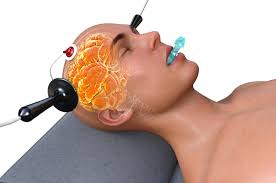
Electroconvulsive therapy involves the controlled induction of a brief generalized seizure under anesthesia. Despite stigma, modern ECT is safe, highly regulated, and often life-saving for severe, treatment-resistant, or psychotic depression.
The American Psychiatric Association recognizes ECT as one of the most effective acute treatments for major depressive disorder, with response rates often exceeding 70–80% in severe cases.
But how does it work?
While the full mechanism isn’t completely understood, ECT appears to:
- Reset dysfunctional neural circuits
- Increase neuroplasticity
- Elevate brain-derived neurotrophic factor (BDNF)
- Modulate monoamine neurotransmitters
- Normalize stress hormone regulation
One of its less discussed but important effects: it also alters sleep architecture.
ECT and REM Sleep Normalization
One of the earliest observable biological changes after ECT is a shift in REM sleep patterns.
Research from institutions such as Duke University has shown that ECT:
- Prolongs REM latency (delays REM onset)
- Reduces REM density
- Increases slow-wave sleep
These changes often parallel clinical improvement in mood.
In other words, as sleep architecture normalizes, depressive symptoms frequently improve.
This has led some researchers to hypothesize that REM dysregulation may not just be a symptom of depression—it may contribute to it.
Sleep as a Mediator of Mood Recovery
Sleep plays a critical role in:
- Emotional memory processing
- Stress recovery
- Synaptic pruning
- Neurotransmitter balance
ECT may accelerate recovery by restoring healthier brain oscillations and sleep cycles. Improved slow-wave sleep enhances neural repair and emotional stabilization, while normalized REM sleep may reduce pathological rumination.
The relationship appears bidirectional:
- Depression disrupts sleep
- Abnormal sleep worsens mood
- ECT improves mood and sleep simultaneously
The Paradox of Sleep Deprivation
Interestingly, total sleep deprivation can temporarily improve depressive symptoms in some patients. This paradox has been studied extensively at the University of Pennsylvania and elsewhere.
However:
- The antidepressant effect of sleep deprivation is short-lived
- Symptoms usually return after recovery sleep
ECT differs in that it appears to produce more sustained neurobiological changes rather than temporary circadian disruption.
Cognitive Effects, ECT, and Sleep
A common concern about ECT is cognitive side effects, particularly short-term memory disruption.
Sleep plays a role here as well. Since memory consolidation depends on slow-wave and REM sleep, the post-ECT sleep period may influence cognitive recovery.
Optimizing sleep hygiene during ECT treatment may support:
- Memory consolidation
- Emotional regulation
- Overall treatment response
Clinical Implications
Understanding the sleep–ECT connection highlights several important points:
- Sleep disturbances in depression are not secondary—they are central.
- Improvements in sleep may signal early treatment response.
- Monitoring sleep patterns during ECT may provide insight into recovery trajectory.
- Adjunctive sleep interventions (CBT-I, circadian stabilization) may enhance long-term outcomes.
The Bigger Picture
Depression is not only a disorder of mood—it is a disorder of timing, rhythm, and neural regulation.
ECT appears to act, in part, as a biological reset button. By modulating brain circuits and restoring healthier sleep architecture, it may help recalibrate the systems that regulate emotion, cognition, and stress.
In this sense, sleep is not just something that improves after depression lifts.
It may be one of the mechanisms through which healing happens.
If you or someone you know struggles with sleep, please click the orange button below to take a free online sleep test and talk with one of our sleep health professionals.
