
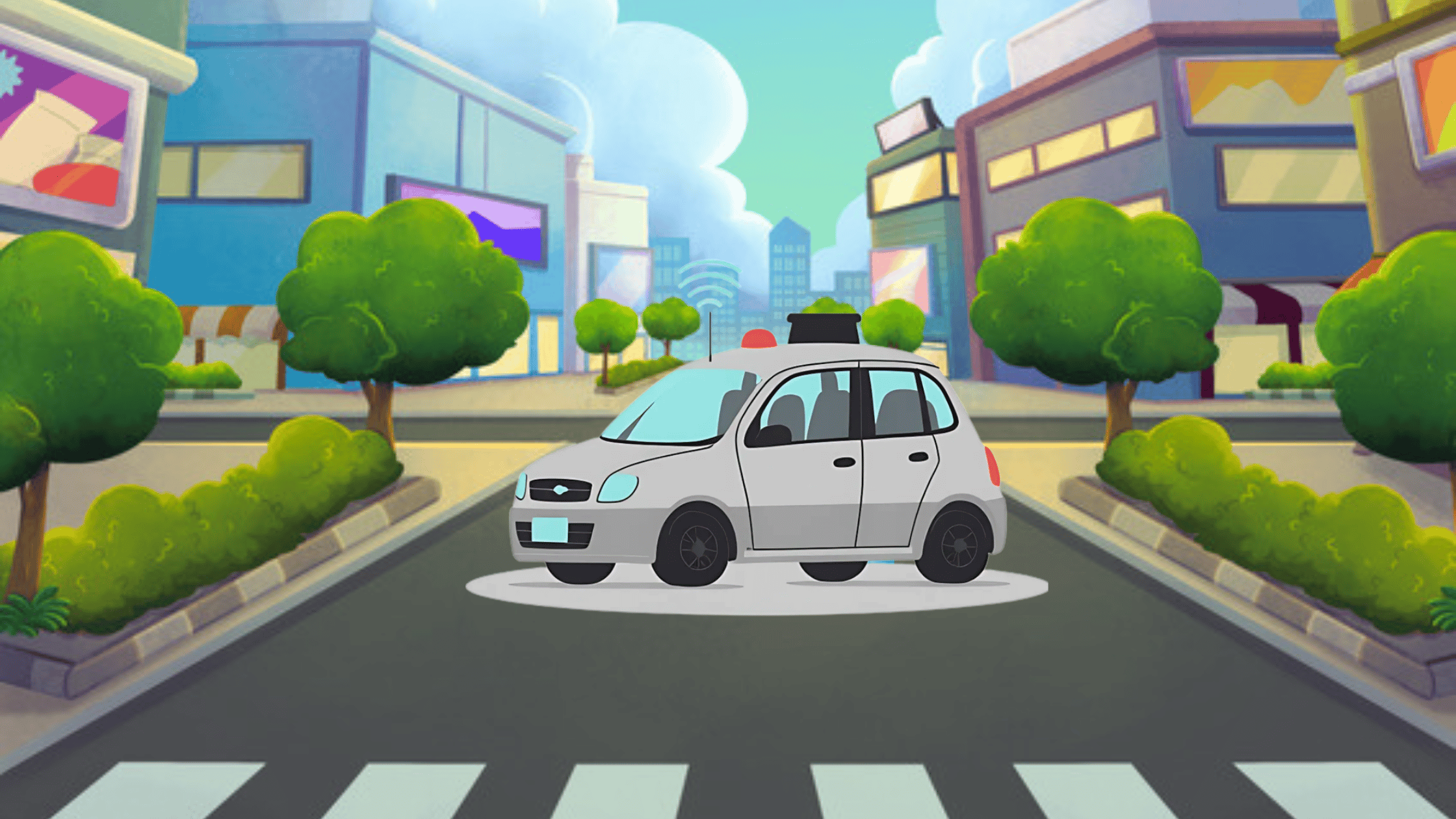
 Self-driving technology promises a future where commuting becomes productive, relaxing — maybe even nap-worthy. With advanced driver assistance systems (ADAS) becoming more common, some drivers feel tempted to recline the seat, close their eyes, and let the car do the work.
But sleeping in a self-driving car — especially today — carries serious risks.
Let’s break down why.
1. Most “Self-Driving” Cars Aren’t Fully Autonomous
Many vehicles marketed as “self-driving” are not fully autonomous. Systems like Tesla Autopilot, Ford BlueCruise, and GM Super Cruise are classified as Level 2 automation.
Level 2 means:
- The car can steer, accelerate, and brake in certain conditions.
- A human driver must remain attentive and ready to take over at all times.
These systems are driver assistance technologies — not replacements for human supervision. If you’re asleep, you can’t intervene during sudden road hazards, system failures, or unpredictable driver behavior from others.
2. Human Reaction Time Still Matters
Even advanced AI systems struggle with edge cases:
- Unusual road construction
- Debris on highways
- Poor weather conditions
- Faded lane markings
- Sudden erratic behavior from other drivers
Autonomous systems rely on cameras, radar, lidar (in some cases), and machine learning models trained on massive datasets. But no dataset covers every possible real-world scenario.
When things go wrong, the system often expects the human to retake control within seconds.
If you’re asleep, those seconds are lost.
3. Automation Complacency Is a Real Psychological Risk
One of the most dangerous effects of partial automation is “automation complacency.”
When systems work most of the time smoothly, humans:
- Overestimate reliability
- Underestimate edge-case risk
- Gradually disengage
Sleep becomes the extreme version of disengagement.
Research into aviation and driving automation shows that humans are actually poor passive supervisors. Our attention fades when we’re not actively involved — and when we fully disengage, we cannot re-engage instantly.
4. Legal Liability Falls on the Driver
In most jurisdictions today, the person in the driver’s seat is legally responsible for the vehicle’s operation — regardless of automation features.
If an accident occurs while you’re asleep behind the wheel of a Level 2 vehicle, liability will almost certainly fall on you.
Even companies pioneering higher levels of autonomy, such as Waymo, operate fully autonomous fleets under tightly controlled conditions, specific geofenced areas, and regulatory oversight.
Your personal vehicle with “self-driving” features does not operate under those same safeguards.
5. System Monitoring Can Fail
Some vehicles include driver monitoring systems that track:
- Eye movement
- Head position
- Steering input
If the system detects inattention, it may issue alerts or disengage automation.
But monitoring systems are not foolproof. Sensors can misread, and some drivers attempt to circumvent safeguards.
Sleeping drivers may not respond to escalating warnings, leading to sudden deactivation at highway speeds.
That’s a dangerous scenario.
6. The False Sense of Future Readiness
There’s a common belief: “Autonomous driving is basically solved.”
It isn’t.
While progress is remarkable, fully autonomous Level 4 and Level 5 vehicles — capable of handling all conditions without human oversight — are not yet widely available for personal ownership.
Until then, sleeping in a self-driving car isn’t futuristic convenience — it’s high-risk behavior.
7. Fatigue Is Already a Major Safety Issue
Driver fatigue contributes to thousands of crashes annually. Using automation as a way to “push through” exhaustion may worsen the problem.
Instead of sleeping behind the wheel:
- Pull over safely.
- Use rest stops.
- Share driving duties.
- Plan trips to avoid exhaustion.
Automation is designed to assist alert drivers — not replace them.
The Bottom Line
Self-driving technology is advancing rapidly, and the future may indeed include vehicles that allow safe rest while traveling.
But today’s mainstream systems require active human supervision.
Sleeping in a self-driving car:
- Eliminates reaction time
- Increases legal risk
- Overestimates current technology
- Puts lives at stake
Until full autonomy becomes reality, the safest place to sleep is not behind the wheel — no matter how smart your car seems. The technology is impressive. It just isn’t a substitute for consciousness — yet.
If you or someone you know struggles with sleep, please click the orange button below to take a free online sleep test and talk with one of our sleep health professionals.
