ANCSLEEP BLOG

Mindfulness Practices for Improved Sleep

Posted by Tyler Britton on Apr 29, 2020 8:00:00 AM

What is Mindfulness?

Mindfulness is defined by Merriam-Webster as “the quality or state of being mindful” and “the practice of maintaining a nonjudgmental state of heightened or complete awareness of one’s thoughts, emotions, or experiences on a moment-to-moment basis”.

Being mindful means drawing heightened awareness to one’s internal state, and maintaining that awareness across time. These practices can be used to help you get to sleep. Continue reading to learn more. .

Read More

How to Take Sleep Inventory to Combat Sleep

Posted by Tyler Britton on Apr 27, 2020 8:00:00 AM

Sleep Deprivation

If you have experienced sleep deprivation, you know how brutal it can be. Chronic sleep deprivation is when you are deprived for long periods of time – at least a month or more. This differs from acute sleep deprivation, that is short lived and often has a very specific cause. Chronic sleep deprivation will most certainly make life miserable for you, and can negatively impact those around you as well.

Sleep deprivation impacts your performance and health in all areas of life. Furthermore, it can have serious medical consequences, namely:

  • Shortened life expectancy
  • Much greater risk of disease and medical problems
  • Lower quality of life

To avoid sleep deprivation, you need enough time asleep. It’s not that simple though, there are many factors to consider:

  • We need different sleep at different ages
  • Our sleep patterns change as we get older
  • You are unique with your own unique sleep patterns
  • Our unique sleep patterns change in response to things like seasons, our daily activities, life events, etc.

You need to be aware of what your needs are. Sleep deprivation occurs when you are not meeting your sleep needs.

Read More

How Muscles and Pain Affect Sleep

Posted by Tyler Britton on Apr 23, 2020 8:00:00 AM

Pain is a common issue that many adults face, and it greatly impacts our quality and quantity of sleep. Chronic pain can really hinder your ability to get a good night’s sleep, which makes it harder to heal, and creates many types of complications. Here is an overview of how muscles and pain interact with sleep, and some tips for how to improve your sleep, even in the presence of pain.

Read More
Topics: Pain and Sleep

How Cortisol Affects Sleep

Posted by Tyler Britton on Apr 20, 2020 8:00:00 AM

Contributing factors to quality sleep

Sleep quality is impacted by many contributing factors. Sleep position, cortisol levels, dietary considerations, light exposure, and many more factors all play a role in sleeping. Many of us are looking for ways to improve our sleep quality, because of the myriad of benefits that high-quality sleep provides:

  • Improved alertness and memory
  • Reduction of chronic pain
  • Reduced inflammation
  • Increased energy levels

One of the most often overlooked factors for improving overall sleep quality is the body’s primary stress hormone: cortisol. Cortisol is an internal chemical signal that is released as a response to external or internal stressors.

Anxiety inducing situation increase cortisol levels in the body. For example, when you get pulled over and your heart rate increases, your palms become sweaty, and your breathing rate picks up, that is a sign of a cortisol boost. Cortisol is also an important regulatory hormone in the body that is at its peak levels in the morning. Continue reading to learn more about how cortisol can affect sleep. 

Read More
Topics: Cortisol

What it’s Like to Experience Obstructive Sleep Apnea (OSA)

Posted by Tyler Britton on Apr 8, 2020 8:00:00 AM

What is Obstructive Sleep Apnea?

Obstructive sleep apnea (OSA) is a sleeping disorder and medical condition that causes you to repeatedly stop breathing and then rouse yourself throughout the night. OSA happens when the throat muscles in the back of your throat relax, causing the airway to narrow and your tongue to cleave to the back of your mouth, instigating snoring and a closed airway. Because you have rouse each time this happens, OSA prevents you from getting restful sleep, resulting in chronic (and potentially severe) sleep deprivation.

This process of not breathing and rousing can happen many times per hour:

  • Mild OSA: 5-14 apneas per hour of sleep
  • Moderate OSA: 15-30 apneas per hour of sleep
  • Severe OSA: 30+ apneas per hour of sleep

Even moderate sleep apnea causes you to wake up over 100 times per night. The good news is that OSA is usually fully treated with CPAP therapy.

The bad news is that the risks are still the same for mild, moderate, and severe OSA, the only difference may be the prevalence and severity of the symptoms – that is, whether or not you are rousing 80 or 250 times per night, you are incredibly sleep deprived regardless.

Read More
Topics: Sleep Apnea

What are Most Common Parasomnias

Posted by Tyler Britton on Apr 6, 2020 8:00:00 AM

Different Types of Parasomnias

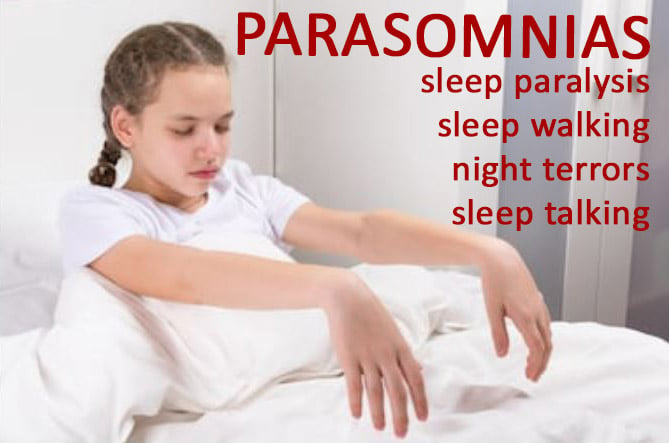
What are Parasomnias? Parasomnias are not a single sleep disorder, but refer to a collection of sleep disorders that disrupt your circadian rhythm and impact sleep quality. You may or may not be aware that you have a parasomnia sleep disorder, such as those listed below.  

Some of the most common para parasomnias, and those that we will discuss in this article, include:

  • Sleep talking
  • Sleep walking
  • Night terrors
  • Sleep paralysis
  • Nocturnal paroxysmal dystonia (NPD)
  • Sleep bruxism (teeth grinding)
  • REM sleep behavior disorder

As we go through the list, see if you have experienced any of these symptoms and speak with your doctor about them.

Read More

What it’s Like to Experience Insomnia

Posted by Tyler Britton on Mar 19, 2020 8:00:00 AM

What is Insomnia?

Insomnia is being unable to fall asleep, stay asleep for any restful of time, or sleep until an appropriate time in the morning (i.e., waking up wide awake at 3am). It is a frustrating disorder because you want to sleep, but you just can’t. As you get more sleep deprived over time, this disconnect between wanting to sleep and actually sleeping can become extremely pronounced. Unfortunately, insomnia can have consequences far more severe than just frustration.

Insomnia can be 2 types:

  • Chronicit is a problem most night and lasts more than a month
  • Acute it is a problem most nights that lasts for a few days to a few weeks, but goes away

Sometimes insomnia has a clear underlying cause, and sometimes it doesn’t. The major concern with insomnia is severe sleep deprivation.

Read More
Topics: Insomnia

What’s it’s Like to Experience Sleep Paralysis

Posted by Tyler Britton on Mar 18, 2020 4:00:00 PM

What is Sleep Paralysis?

Sleep paralysis is an episode where you can’t move your body or speak directly after or directly before sleep, and while you are conscious. It is part of a collection of sleep disorders called parasomnias, which simply indicates that your sleep has some kind of general disruption. In the case of sleep paralysis, your body has trouble transitioning to and from sleep.

During an episode of sleep paralysis you will be:

  • Unable to move
  • Unable to speak
  • Able to move your eyes
  • Conscious

Sleep paralysis may be chronic, seldom, or only happen once. It can range from confusing to terrifying, and episodes can last a few seconds, or as long as a couple of minutes. Occasionally, though rare, they may last longer than two minutes. 

Though sleep paralysis can be scary, it’s not dangerous.

Read More
Topics: Sleep Paralysis

Common Causes of Sleep Paralysis

Posted by Tyler Britton on Mar 17, 2020 8:00:00 AM

What is Sleep Paralysis?

Sleep paralysis is being unable to move or speak during the transition between wakefulness and sleep. Sleep paralysis occurs either right after you wake up, or right before you fall asleep. It is result of your body not smoothly transitioning between stages of wakefulness and sleep. And it can be mildly disconcerting to terrifying, especially if you are unaware what sleep paralysis is. 

When sleep paralysis strikes, you will be unable to move your body, except for your eyes, and unable to speak. It can last only a few seconds or for a couple of minutes, which can be terrifying. Although uncommon, people also report sleep paralysis lasting even longer than two minutes.

Read More
Topics: Sleep Paralysis

Overview of Sleep Talking

Posted by Tyler Britton on Mar 16, 2020 8:00:00 AM

What is Somniloquy, or sleep talking? 

Does your bed partner tell you that you whisper, laugh, mumble, or even outright talk in your sleep? Or does your child shout or give long, incomprehensible speeches? This is referred to as sleep talking, or somniloquy.

Unlike many other sleep disorders, which can have serious medical consequences, somniloquy is a parasomnia that is often light hearted. Witnessing someone sleep talking can be funny, charming, startling, vulgar, or strange. But fortunately, there are almost never any medical consequences to sleep talking, other than maybe keeping a bed partner awake.

Sleep talking episodes can last up to 30 seconds, but usually not beyond that [SleepFoundation]. People who sleep talk won’t remember there midnight diatribes the next morning.

Sleep talking can be:

  • Mild – sleep talking less than once per week
  • Moderate- sleep talking occurs every week but not every night
  • Severe – sleep talking occurs nearly every night

Read More
Topics: Sleep Talking

Subscribe to Email Updates

Recent Posts

Posts by Topic

see all