
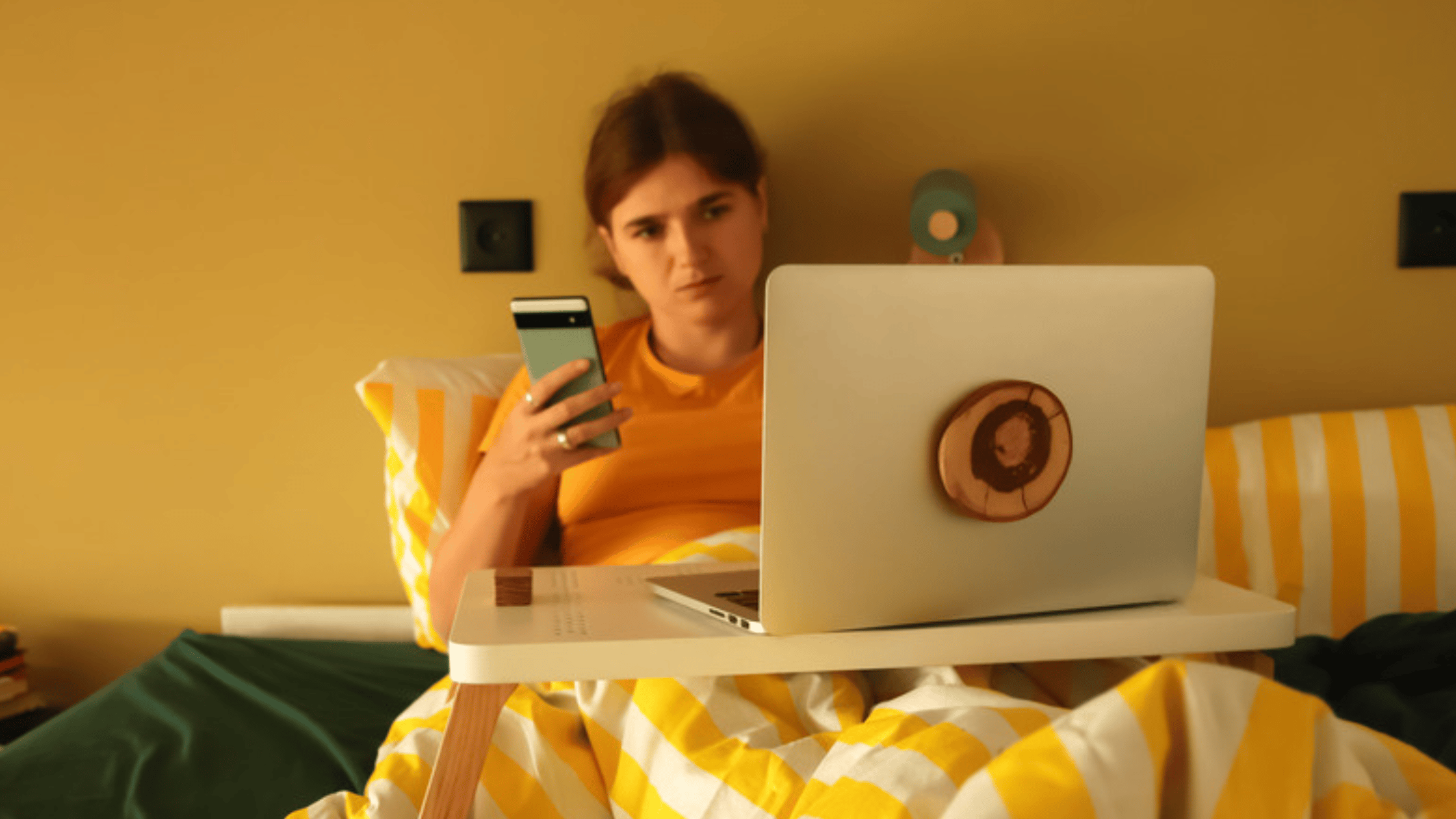
Procrastination and sleep have a surprisingly tight relationship. If you’ve ever stayed up late avoiding a task… then felt too exhausted the next day to focus… only to procrastinate again—you’ve experienced the cycle firsthand.
Sleep and procrastination don’t just coexist. They actively reinforce each other.
Let’s break down how.
1. Sleep Deprivation Weakens Executive Function
Procrastination isn’t laziness—it’s often a breakdown in executive functioning.
The prefrontal cortex is responsible for:
- Planning
- Prioritizing
- Starting tasks
- Delaying gratification
When you’re sleep deprived, this brain region becomes less efficient. Research from Harvard Medical School shows that even moderate sleep restriction impairs attention, working memory, and decision-making.
When executive control drops:
- Tasks feel harder to start
- Distractions feel more tempting
- Short-term rewards win
In other words, poor sleep lowers your resistance to procrastination.
2. Emotional Regulation and Task Avoidance
Many people procrastinate not because tasks are difficult—but because they are emotionally uncomfortable.
Sleep loss increases activity in the amygdala (the emotional threat center) while weakening communication with the prefrontal cortex. Research from University of California, Berkeley demonstrates that sleep deprivation heightens emotional reactivity.
So after poor sleep:
- Minor stress feels overwhelming
- Feedback feels more personal
- Tasks feel more intimidating
Procrastination becomes emotional self-protection.
3. Bedtime Procrastination: Delaying Sleep on Purpose
There’s also a specific phenomenon called “revenge bedtime procrastination”—delaying sleep despite knowing you need it.
This often happens when:
- Your day felt out of control
- You lacked personal time
- You want to reclaim autonomy
Ironically, this delays sleep, which worsens next-day focus—making procrastination more likely again.
The National Sleep Foundation notes that irregular sleep schedules are associated with impaired cognitive performance and mood instability—both risk factors for avoidance behaviors.
4. The Dopamine Factor
Sleep deprivation disrupts dopamine regulation. Dopamine drives:
- Motivation
- Anticipation
- Task initiation
When dopamine signaling is dysregulated, tasks feel less rewarding and more effortful.
Your brain starts searching for quick dopamine hits instead:
- Social media
- Snacking
- Streaming
- Scrolling
Procrastination becomes neurologically reinforced.
5. Fatigue Mimics Burnout
Chronic short sleep can create symptoms that resemble burnout:
- Low motivation
- Reduced concentration
- Irritability
- Mental fog
Data from the Centers for Disease Control and Prevention show that insufficient sleep is linked to decreased productivity and increased errors in the workplace.
Sometimes what we label as “chronic procrastination” is actually chronic fatigue.
The Procrastination–Sleep Loop
Here’s how the cycle often unfolds:
- You delay tasks during the day.
- Work piles up.
- You stay up late to catch up (or avoid thinking about it).
- Sleep shortens.
- Executive function declines.
- Tasks feel harder.
- You procrastinate more.
Repeat.
How to Break the Cycle
If you struggle with procrastination, improving sleep may be more effective than trying to “try harder.”
1. Protect a Fixed Wake Time
-
A consistent wake time stabilizes your circadian rhythm—even if bedtime fluctuates.
2. Use a “Start Before You’re Ready” Rule
-
Commit to just 5 minutes. Sleep-deprived brains resist starting more than doing.
3. Create a Wind-Down Boundary
-
Set a nightly alarm signaling the end of productivity and screens.
4. Separate Work from Bed
-
Your brain should associate your bed with sleep—not stress or unfinished tasks.
5. Address Underlying Sleep Issues
-
Sleep apnea, insomnia, or chronic sleep restriction will sabotage motivation long-term.
The Bigger Insight
Procrastination isn’t just a time-management issue. It’s often an energy-management issue.
When you’re well-rested:
- Tasks feel more manageable
- Emotional discomfort is easier to tolerate
- Motivation improves
- Focus strengthens
If you want to procrastinate less, start with sleep—not self-criticism.
Because sometimes the most productive thing you can do is go to bed.
If you or someone you know struggles with sleep, please click the orange button below to take a free online sleep test and talk with one of our sleep health professionals.
